

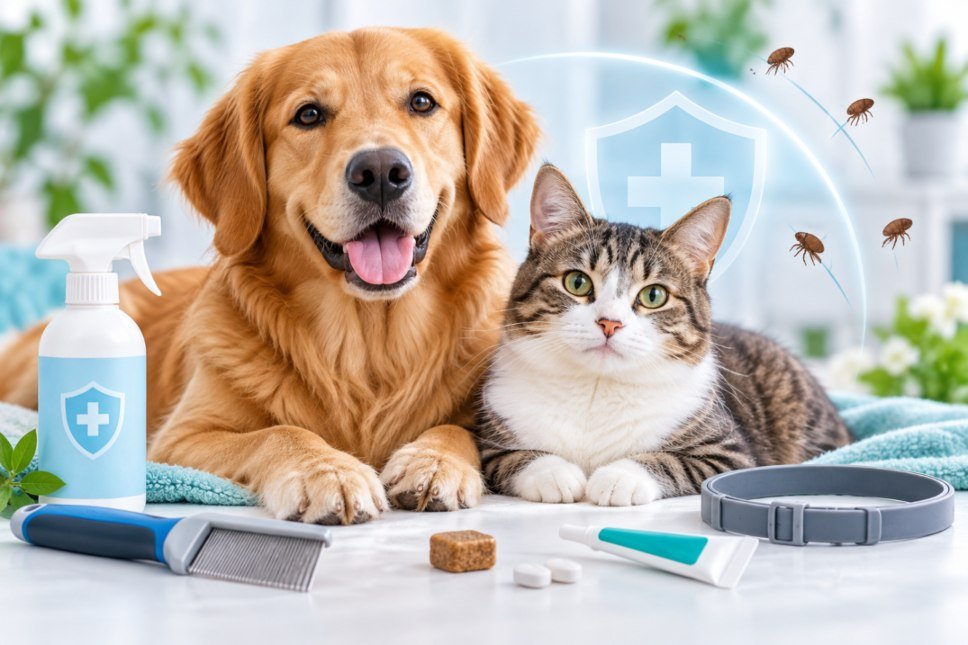
The best flea treatments for dogs and cats depend on the pet, the type of flea problem, and whether you also need protection against ticks. Some pets do well with topical flea medicine, while others may benefit from oral treatments, sprays, collars, or other preventive products.
There is no single flea medicine that works best for every dog or cat. Age, weight, species, health, lifestyle, and the severity of the infestation all matter. A product that suits an adult dog may not suit a small puppy, and some flea products made for dogs can be dangerous for cats.
For that reason, the safest approach is to choose a flea treatment that is specifically labeled for your pet’s species, age, and weight. If your pet has an existing health condition, takes medication, is pregnant or nursing, or has reacted to flea treatment before, speak with a veterinarian before starting a new product.
This guide explains the main types of flea medicine for dogs and cats, how they differ, and what to consider when choosing flea and tick protection.
Best Flea Treatments for Dogs and Cats at a Glance
Always check the exact label before using any flea product. Products may have different minimum ages, weight ranges, application schedules, and safety restrictions.
What Is the Best Flea Medicine for Dogs?
The best flea medicine for dogs depends on what you need the product to do.
A dog with an active flea infestation may need a different approach from a dog that only needs ongoing prevention. Dogs that regularly walk through wooded areas or tall grass may also need a flea and tick treatment rather than flea-only protection.
Common dog flea medication options include:
- Oral flea pills and chews
- Topical flea treatments
- Flea and tick preventatives
- Flea collars
- Flea sprays
- Flea shampoos
When comparing flea meds for dogs, check how quickly the treatment starts working, how long it lasts, whether it controls ticks, and whether it is suitable for your dog’s age and weight.
Best Flea Treatment for Dogs With an Active Infestation

If your dog already has fleas, focus on both killing adult fleas and preventing the infestation from continuing.
A fast-acting flea treatment may reduce the number of adult fleas quickly, but that does not always solve the full problem. Flea eggs, larvae, and pupae may remain in carpets, bedding, furniture, and other areas of the home.
For this reason, good dog flea control usually involves:
- Treating the affected dog.
- Treating other pets in the household with suitable products.
- Washing pet bedding.
- Vacuuming carpets, rugs, flooring edges, and furniture.
- Continuing flea prevention as directed.
Established flea infestations can take time to control because immature flea stages remain in the environment. Parasite-control guidance recommends treating all pets in the home and maintaining ongoing flea protection rather than relying on a single application.
Best Flea and Tick Treatment for Dogs
If your dog spends time outdoors, the best flea and tick treatment for dogs may provide broader protection than a flea-only medicine.
Flea and tick products come in several forms, including oral medicines, topical treatments, sprays, and collars.
When comparing the best flea and tick meds for dogs, consider:
- Your dog’s weight
- Your dog’s age
- Local flea and tick exposure
- How often the product needs to be given
- Whether your dog swims regularly
- Existing health conditions
- Other medications your dog takes
- Whether you also own cats
Do not assume every flea medication also controls ticks. Always check the product label to see exactly which parasites it covers.
Best Flea Killer for Dogs
The phrase “best flea killer for dogs” usually refers to a treatment that kills adult fleas already living on the dog.
Some treatments begin working more quickly than others. However, speed is only one part of effective flea control.
A useful flea treatment should also fit into a longer-term prevention plan. If you kill the adult fleas on your dog but ignore flea eggs and immature stages in your home, new fleas may continue to appear.
The strongest flea medicine for dogs is therefore not automatically the best choice. A suitable treatment is one that works for your dog’s needs while staying within the product’s safety instructions.
Fast-Acting Flea Treatment for Dogs
Fast-acting flea treatments can be useful when a dog has visible fleas and needs prompt relief.
Some oral flea medications are designed to kill adult fleas relatively quickly, while longer-lasting products help prevent new infestations.
These treatments may serve different purposes, so do not automatically replace ongoing flea prevention with a fast-acting product.
If your dog has severe itching, inflamed skin, hair loss, sores, or signs of illness, contact a veterinarian. Fleas can cause more than simple irritation, especially in sensitive animals.
Best Flea Pills for Dogs
Flea pills are popular because they do not leave medication on the coat.
Depending on the product, oral flea medicine may come as a tablet or flavored chew. Some products focus mainly on fleas, while others also cover ticks or additional parasites.
When choosing the best flea pills for dogs, look at:
- Minimum age
- Minimum weight
- Duration of protection
- Parasites covered
- Dosing frequency
- Medical history
- Possible adverse effects
Some flea and tick medicines belong to the isoxazoline class. The FDA states that these products are considered safe and effective for most dogs and cats, but neurologic adverse reactions such as tremors, poor coordination, and seizures have been reported in some animals. Pet owners should discuss the animal’s medical history with a veterinarian when deciding whether this type of medication is appropriate.
Best Flea Pill for Small Dogs
Small dogs need products designed for their actual weight.
Never divide, increase, or estimate a flea dose unless the product instructions or your veterinarian specifically direct you to do so.
Weight ranges matter because flea medication contains a measured amount of active ingredient. Using a product intended for a much larger dog can expose a small dog to an inappropriate dose.
Best Topical Flea Treatment for Dogs
Topical flea medicine is applied directly to the dog’s skin, commonly around the back of the neck or along the back depending on the product.
These treatments are also called spot-on products or flea drops.
The best topical flea treatment for dogs should:
- Match the dog’s weight range
- Be suitable for the dog’s age
- Cover the parasites you want to control
- Have clear application instructions
- Fit your preferred treatment schedule
Apply topical products to the skin as directed rather than simply putting them on top of the hair.
Keep pets from licking or grooming one another until the treatment has dried if the label requires separation.
Best OTC Flea Meds for Dogs
Many dog flea treatments are available over the counter, while others require veterinary authorization.
The best OTC flea meds for dogs are not necessarily the strongest products on the shelf. The right product should match your dog’s species, weight, age, and health status.
Before using an over-the-counter flea treatment:
- Read the entire label.
- Confirm that it is made for dogs.
- Check your dog’s weight range.
- Check the minimum age.
- Follow the dosing schedule.
- Review warnings and precautions.
- Do not combine multiple flea products unless your veterinarian says it is appropriate.
A store-bought product can still cause problems when used incorrectly.
Best Flea Treatment for Puppies
Choosing the best flea treatment for puppies requires extra care because many flea products have minimum age and weight requirements.
Do not use adult dog flea medicine on a puppy unless the label specifically states that the product is safe for a puppy of that age and weight.
For puppies that are too young for medicated flea treatment, a veterinarian may recommend non-drug measures such as careful flea-comb use until the puppy reaches an appropriate age.
EPA and FDA guidance both advise against using flea and tick products on puppies or kittens unless the label specifically allows use at that life stage.
What Is the Best Flea Treatment for Cats?

The best flea treatment for cats must be specifically designed or approved for cats.
This distinction is extremely important.
Never assume that a flea medicine for dogs is safe for a cat simply because both animals have fleas. Some active ingredients and concentrations used in dog products can be harmful to cats.
Cat flea treatments may include:
- Topical flea medicine
- Oral medication
- Flea and tick products
- Flea collars
- Flea sprays
- Flea shampoos
- Flea combs
The best flea medicine for cats depends on age, weight, health, lifestyle, and whether you need protection against ticks or other parasites as well.
Best Flea and Tick Treatment for Cats
Cats that spend time outdoors may face exposure to both fleas and ticks.
When looking for the best flea and tick for cats, choose a product specifically labeled for feline use.
Check:
- Minimum age
- Minimum weight
- Duration of protection
- Tick species covered
- Other parasites covered
- Application instructions
- Health warnings
Indoor cats may also get fleas. Fleas can enter homes on other pets, clothing, visitors, or wildlife around the property.
For this reason, flea prevention for cats may still matter even if a cat rarely goes outside.
Best Flea Prevention for Cats
Preventing fleas is usually easier than dealing with a large infestation.
The best flea prevention for cats should be easy to use consistently and appropriate for the individual cat.
Consistency matters because missing doses or allowing long gaps between treatments may leave the cat unprotected.
Parasite-control recommendations commonly support regular, year-round external parasite protection, with the exact prevention plan adjusted for the individual pet’s risks and environment.
Your veterinarian can help you decide whether year-round flea and tick prevention makes sense for your cat based on where you live and how your cat spends its time.
Best Flea Killer for Cats
A flea killer for cats should control adult fleas without exposing the cat to inappropriate ingredients.
If you see many fleas on your cat, remember that the fleas on the animal may represent only part of the infestation.
Flea eggs and developing stages can remain in:
- Carpets
- Pet beds
- Upholstery
- Floor cracks
- Rugs
- Areas where pets sleep
Treating the cat without addressing the home environment can allow the infestation to continue.
Best Flea Treatment for Kittens
The best flea treatment for kittens depends heavily on age and weight.
Young kittens may be too small or too young for many standard flea medications.
Never guess whether an adult cat product is safe for a kitten.
Read the label and check:
- Minimum kitten age
- Minimum weight
- Required dose
- Application method
For kittens that have not reached the minimum age or weight for a medication, flea combing may provide a temporary way to remove visible fleas while you seek veterinary advice.
A heavy flea infestation can be particularly serious in a small kitten because blood loss may contribute to anemia. If a kitten has many fleas, appears weak, has pale gums, stops eating, or seems unwell, contact a veterinarian promptly.
Flea Treatment for Sensitive Cats
Some cats may develop skin irritation or other reactions after using flea products.
If your cat has sensitive skin or has reacted to flea medicine before, do not simply try several products one after another.
Discuss the previous reaction with a veterinarian.
The safest flea medication for a sensitive cat depends on what caused the previous problem and the cat’s health history.
After applying a new flea treatment, monitor your cat for unusual symptoms. Contact a veterinarian if you notice concerning signs such as vomiting, excessive salivation, poor coordination, tremors, unusual weakness, or other sudden changes.
Best Over-the-Counter Flea Medicine for Cats
Some cat flea medications are available without a prescription.
When comparing the best over-the-counter flea medicine for cats, focus on suitability rather than price alone.
Check that the product:
- Clearly states that it is for cats
- Matches your cat’s age
- Matches your cat’s weight
- Covers the parasites you are targeting
- Has clear dosing instructions
- Has not passed its expiration date
Do not use a dog flea product on a cat.
This is one of the most important flea-treatment safety rules. EPA guidance specifically tells pet owners to use products only on the species and weight listed on the label.
Flea Sprays for Dogs and Cats
Flea sprays can help control fleas on some dogs and cats, but they vary widely in formulation and intended use.
Some sprays go directly onto the pet. Others are designed only for carpets, furniture, or other parts of the home.
Never use an environmental flea spray directly on an animal unless its label specifically says you can.
When choosing a flea spray for dogs and cats, verify:
- Which species can use it
- Minimum age
- Application amount
- Whether it goes on the pet or environment
- Drying instructions
- How often it can be reapplied
If you own both dogs and cats, be especially cautious when treating one animal with a product that is not suitable for the other.
Flea Collars
Flea collars offer another form of flea and tick prevention.
Some collars provide longer-lasting protection than treatments that require more frequent dosing.
A flea collar should fit correctly. It should not be so tight that it irritates the neck or so loose that the pet can easily chew it.
Check the label for:
- Species
- Age
- Weight guidance
- Parasites covered
- Duration
- Water exposure instructions
If your pet develops irritation or another adverse reaction after wearing a flea collar, remove it and contact your veterinarian.
Flea Shampoos
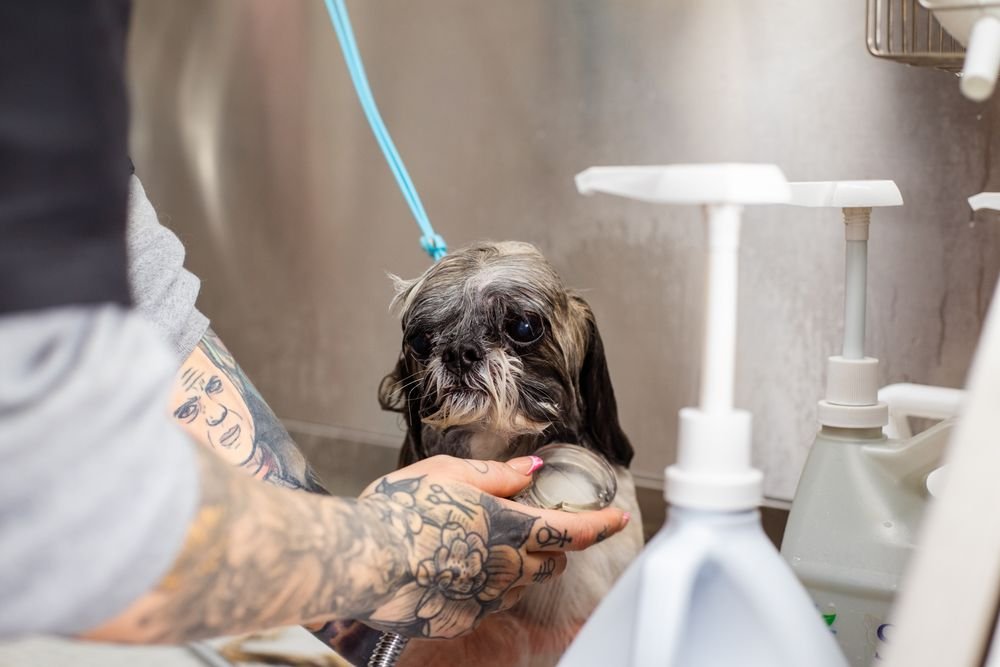
Flea shampoos can help wash adult fleas from a pet’s coat, but they may not provide the same lasting prevention as products designed for ongoing control.
They can be useful as one part of a broader flea-control plan.
Only use a shampoo specifically labeled for your pet’s species and age.
Do not assume that a dog flea shampoo is safe for a cat.
What Flea Medicine Do Vets Recommend?
There is no single flea medicine that every veterinarian recommends for every animal.
Veterinarians choose flea control based on the individual pet.
Factors may include:
- Dog or cat
- Age
- Weight
- Health history
- Previous reactions
- Pregnancy or nursing
- Other medications
- Exposure to ticks
- Local parasite risks
- Indoor or outdoor lifestyle
- Ease of giving medication
- Owner preference
A veterinarian may recommend an oral flea medicine for one dog and a topical product for another.
They may recommend a different approach for a cat living entirely indoors than for a cat that regularly spends time outside.
This is why searching for the strongest flea medicine does not always lead to the safest or most appropriate answer.
Oral vs Topical Flea Treatment
Both oral and topical flea medicines can be useful.
Oral Flea Treatment
Oral products may suit owners who:
- Prefer not to apply medication to the coat
- Have pets that swim or bathe frequently
- Find pills or chews easy to give
- Want a product that also covers certain other parasites
Topical Flea Treatment
Topical treatments may suit owners who:
- Prefer not to give tablets
- Want a simple spot-on treatment
- Have pets that accept topical application easily
- Need a specific parasite-control combination
Neither form is automatically better.
Choose based on the individual product, your pet, and veterinary guidance.
Flea-Only vs Flea and Tick Treatment
Not every pet has the same parasite exposure.
A flea-only product may be enough in some situations. In other cases, broader flea and tick prevention may make more sense.
Consider flea and tick protection if your pet:
- Spends time in wooded areas
- Walks through tall grass
- Travels frequently
- Lives in a region with significant tick activity
- Has previously picked up ticks
Always check which tick species a product controls because coverage can differ.
How to Choose the Right Flea Treatment
Instead of choosing flea medicine based on advertising or price, work through a few basic questions.
1. Is It Made for Your Pet’s Species?
This comes first.
Dog products belong on dogs. Cat products belong on cats unless the label clearly states otherwise.
2. Does It Match Your Pet’s Age?
Puppies and kittens may not qualify for the same products as adult pets.
3. Does It Match Your Pet’s Weight?
Choose the correct weight range.
Do not estimate if you are unsure of your pet’s current weight.
4. Do You Need Flea or Flea and Tick Protection?
Check what parasites your pet is actually exposed to.
5. How Long Does Protection Last?
Products may require different treatment schedules.
Choose one that you can use consistently.
6. Does Your Pet Have Health Problems?
Ask your veterinarian before introducing a new flea medication if your pet has seizures, chronic illness, previous drug reactions, or other medical concerns.
7. Can You Use It Correctly?
Even an effective product may fail if it is applied incorrectly or doses are missed.
Read the instructions every time. Product directions and warnings may change.
How to Get Rid of Fleas in Your Home
Treating the pet is only part of controlling an established flea infestation.
Adult fleas live on animals, but other flea life stages can develop in the environment.
A practical home-control routine includes:
Vacuum Frequently
Vacuum carpets, rugs, furniture, floor edges, and areas where pets spend time.
Dispose of vacuum debris appropriately after cleaning.
Wash Pet Bedding
Wash blankets, bedding, and washable pet fabrics regularly.
Treat Every Pet Appropriately
If one pet has fleas, check every dog and cat in the household.
Each animal needs a product that is safe for its own species, age, and weight.
Continue Prevention
Do not stop simply because you no longer see adult fleas.
New adults can emerge from immature stages already present in the environment. Established infestations may therefore take sustained treatment and cleaning to resolve.
Flea Treatment Safety Tips
Flea medicines can be effective when used correctly, but they are not interchangeable.
Follow these basic rules:
- Read the label before every use.
- Use the product only on the listed species.
- Choose the correct weight range.
- Check minimum age requirements.
- Never apply a dog-only flea product to a cat.
- Do not apply more than the recommended dose.
- Do not combine flea medicines unless a veterinarian advises it.
- Keep product packaging in case you need safety information later.
- Monitor your pet after using a new treatment.
- Contact your veterinarian if you suspect an adverse reaction.
FDA and EPA guidance both emphasize following label directions closely and involving a veterinarian when choosing products for pets with health concerns or previous sensitivities.
Final Thoughts
The best flea treatments for dogs and cats are not simply the products with the strongest claims or fastest action. The right treatment must fit the individual pet.
Dogs and cats have different medication needs, and puppies, kittens, small pets, senior animals, and pets with health conditions may require additional care when choosing flea medicine.
Compare oral treatments, topical flea medicine, sprays, collars, and flea and tick prevention based on species, age, weight, parasite exposure, and ease of use. Follow the label carefully, treat the home environment when an infestation is present, and involve your veterinarian whenever your pet has health concerns or you are unsure which product is appropriate.
A consistent and properly chosen flea-control plan can do more than kill the fleas you see. It can help prevent new infestations and keep dogs and cats protected throughout the year.
Frequently Asked Questions
1. What is the best flea treatment for dogs?
The best flea treatment for dogs depends on the dog’s age, weight, health, lifestyle, and parasite exposure. Options include oral flea medicine, topical treatments, collars, sprays, and flea and tick preventatives. Choose a product specifically labeled for your dog and follow its dosing instructions.
2. What is the best flea medicine for cats?
The best flea medicine for cats is a feline-specific product that matches the cat’s age and weight. Topical treatments, oral medicines, collars, and other options may work depending on the cat. Never use dog-only flea medicine on a cat.
3. What is the best flea and tick treatment for dogs?
The best flea and tick treatment for dogs provides appropriate parasite coverage while matching the dog’s age, weight, medical history, and lifestyle. Oral and topical options are available. Your veterinarian can help you choose the most suitable type.
4. What is the best flea and tick treatment for cats?
Choose a flea and tick treatment specifically labeled for cats. Check minimum age, weight requirements, duration of protection, and the parasites covered. Dog flea and tick products should not be substituted for cat products.
5. What is the best flea treatment for kittens?
The best flea treatment for kittens depends on their age and weight. Many standard medications cannot be used on very young kittens. Read the product label carefully and ask a veterinarian for guidance if the kitten is below the minimum age or weight.
6. What is the best flea treatment for puppies?
Choose a flea treatment specifically approved for puppies of your puppy’s current age and weight. Do not apply adult dog medication unless the product label confirms that it is appropriate.
7. What flea medicine do vets recommend?
Veterinarians do not recommend one universal flea medicine. They choose products based on the animal’s species, age, weight, health history, lifestyle, parasite exposure, and other medications. Oral, topical, and combination flea and tick treatments may all be appropriate in different situations.
8. What is the safest flea medication?
There is no single safest flea medication for every animal. The safest choice is one approved for your pet’s species, age, and weight and used exactly according to its label. Pets with medical conditions or previous treatment reactions should be evaluated by a veterinarian before starting a new product.
9. Are over-the-counter flea medicines effective?
Some over-the-counter flea medicines can be effective when used correctly. Effectiveness varies by product, parasite coverage, and how consistently it is used. Choose a product designed for your pet and follow all directions.
10. How can I keep fleas from coming back?
Use ongoing flea prevention, treat every pet in the household appropriately, vacuum regularly, wash pet bedding, and continue the control program long enough to interrupt the flea life cycle. A veterinarian can help you build a prevention plan for your household.